Join us
Who can apply for the internship?
You can apply regardless of your undergraduate major or university. Not only current students but also students about to graduate and students on a leave of absence can apply. We welcome people who enjoy learning and thinking, and who believe in the values of diligence, honesty and consideration for others. So that interns can take part in research based on a basic knowledge of their major, we give priority to undergraduates who have completed four or more semesters as of the start of the internship. It helps to take biochemistry, genetics, and cell biology beforehand. It is also good to build up, beforehand, the ability to read research papers and understand their key research question and main experimental results.
When can I apply and take part?
We recruit interns at any time. However, because interns can learn and do research sufficiently when they take part for six months or more, we give priority to applicants who can take part for a long period. Because focused training is needed at the start, we recommend starting in a vacation if possible (we recommend starting in January or July). During the vacation, you must take part in research full time. Even during the semester, we welcome those who give lab activities a high priority, put enough time and effort into their assigned research, and take an active part in experiments and discussions.
If I take part as an intern, how can I grow as a researcher?
As an intern, you take part in research under the direct guidance of one postdoctoral researcher or graduate student. You will do things such as reading papers, learning molecular and cell biology experimental methods and doing experiments independently, analyzing sequencing data, and presenting research results. In projects that are mainly experimental, the primary training goal is to build the ability to carry out molecular biology experiments independently. In the first two months, through experiments such as plasmid cloning, cell culture, transfection and enzyme assays, western blotting and RT-PCR, you complete one cycle of the basic experiments needed for research on gene regulation. If you take part in research further after the two-month internship, you will design experiments according to the research goals. Interns who work mainly on bioinformatic analysis learn the basic analysis steps, such as QC of RNA-seq data, quantification of gene expression, normalization and statistical analysis of changes in expression. After two months, you can carry out analyses that fit the project’s research questions and interpret the results biologically. The specific things you learn may differ depending on the project, so please ask further questions during the interview.
If I take part in 2027 and 2028, which research will I take part in?
There are various projects, including the following.
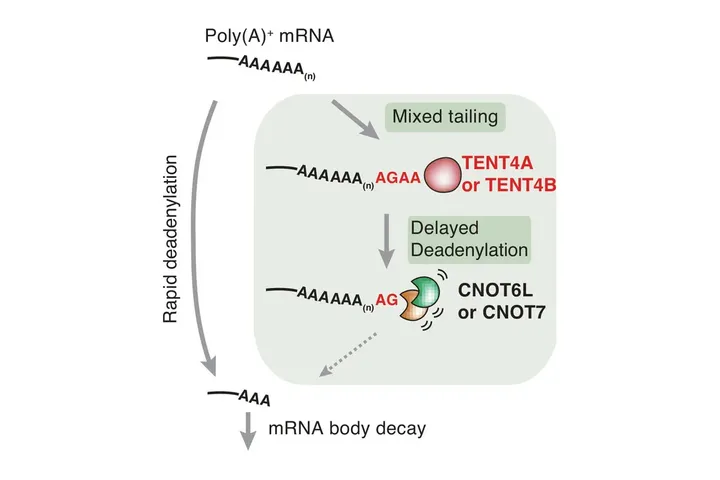
Measuring the decay rate of mRNA and studying its regulatory mechanisms
The goal is to measure precisely how fast an mRNA therapeutic is degraded after it enters the cytoplasm, and to find out which decay factors regulate that rate. This research helps us understand the basic principles of gene regulation through mRNA, and at the same time can become a foundation for developing mRNA vaccine and therapeutic technologies.
Related papers
Studying the mechanisms of RNA stabilization
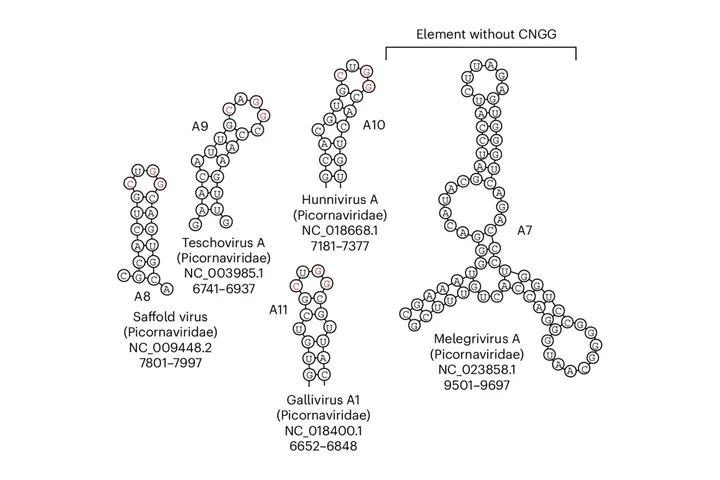
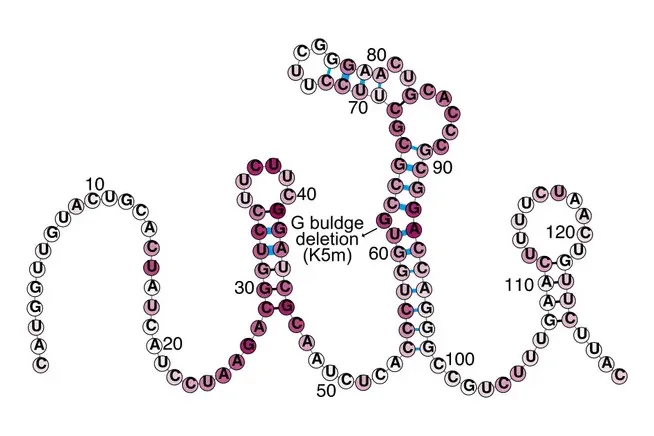
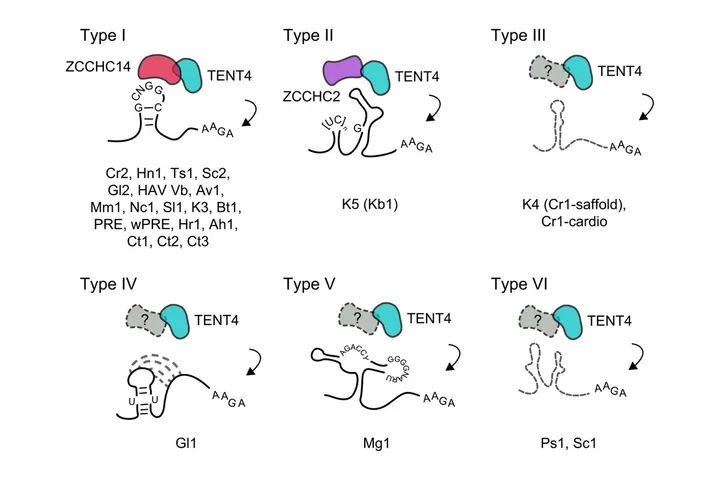
Our lab has found many RNA-stabilizing elements through high-throughput screens, but some of the candidates have not yet been tested by validation experiments. We plan to carry out validation experiments on them, and to study the mechanisms of the elements with clear stabilizing effects. This is expected to reveal new principles of RNA regulation, and can also be used to improve the performance of mRNA therapeutics.
Related papers
Biochemical and structural analysis of mRNA regulatory factors
Our lab has discovered many new proteins that regulate mRNA, and is now studying how they work. As an intern, you can learn protein purification, enzyme assays, interaction assays, mutagenesis and so on, and try doing research on RNA–protein complexes.
How can I apply?
Please apply using the Google Form. You will need to attach a personal statement and a transcript, so it is good to prepare them in advance. After reviewing the documents you submit, we will contact you individually to schedule an interview, and at the interview we will talk together about the internship activities.
The application form will be linked here soon.
More questions
Can the internship be linked to writing my undergraduate thesis?
Yes, it is possible.
Is the internship linked to graduate school admission?
It is not necessarily linked, but if you are considering applying to graduate school, we strongly recommend doing an internship in the lab before you apply. This is because we think it is important to spend time together beforehand to see whether the research direction and the lab culture suit you. You can also do an internship if you are not considering graduate school. However, when there are many applicants, we give priority to those who wish to apply to graduate school.
인턴 신청은 어떤 사람이 할 수 있나요? 신청 자격에 대해 설명해 주세요.
학부 전공, 출신 대학에 관계없이 지원할 수 있습니다. 재학생뿐 아니라 졸업예정자나 휴학생도 지원 가능합니다. 배우고 생각하는 걸 즐기고, 성실과 정직과 배려의 가치를 믿는 분을 환영합니다. 기초 전공 지식을 바탕으로 연구에 참여할 수 있도록, 인턴 시작 시점을 기준으로 4학기 이상 이수한 학부생을 우선적으로 선발합니다. 생화학, 유전학, 세포생물학을 미리 수강하는 것이 도움이 됩니다. 또한 학술 논문을 읽고 연구의 핵심 질문과 주요 실험 결과를 이해하는 능력을 미리 키우면 좋습니다.
언제 신청하고 참여할 수 있나요?
인턴은 상시 모집합니다. 다만 6개월 이상 참여할 때 충분한 학습과 연구가 가능하기 때문에, 장기 참여 가능한 신청자를 우선 선발합니다. 시작할 때는 집중적인 교육이 필요하기 때문에 가능하면 방학 기간에 연구 참여를 시작하는 것을 권장합니다(1월 혹은 7월 시작을 권장). 방학 중에는 전일제로 연구에 참여해야 합니다. 학기 중에도 연구실 활동에 높은 우선순위를 두고, 맡은 연구에 충분한 시간과 노력을 기울이며 실험과 토론에 적극적으로 참여할 수 있는 분을 환영합니다.
인턴으로 참여하면 연구자로서 어떤 성장을 이룰 수 있나요?
인턴으로 들어오면 박사/대학원생 중 1인의 직접적인 지도를 받으며 연구에 참여합니다. 논문 읽기, 분자세포생물학적 실험법 익히고 독립적으로 실험하기, 시퀀싱 데이터 분석, 연구 결과 발표 등을 하게 됩니다. 실험이 주가 되는 프로젝트에서는 분자생물학 실험법을 독립적으로 수행할 수 있는 능력을 키우는 것이 우선적인 교육 목표입니다. 첫 두 달 동안 플라스미드 클로닝, 세포 배양, 트랜스펙션 및 enzyme assay, western blotting, RT-PCR 같은 실험을 통해 유전자 조절 연구에 필요한 기초적인 실험을 한 사이클 완성합니다. 2달 인턴 후에 추가로 연구 참여를 하게 되면 연구 목표에 맞추어 실험을 설계하게 됩니다. 생물정보학 분석을 중심으로 참여하는 인턴은 RNA-seq 데이터의 QC, 유전자 발현량 정량, 정규화 및 발현 변화 통계 분석 등 기본적인 분석 과정을 익힙니다. 2달 이후에는 프로젝트의 연구 질문에 맞는 분석을 수행하고, 그 결과를 생물학적으로 해석할 수 있게 됩니다. 구체적인 학습 내용은 프로젝트에 따라 다를 수 있으니, 면담을 하면서 추가 문의해 주세요.
2027년과 2028년에 참여하게 되는 경우 어떤 연구에 참여하게 될까요?
다음을 포함한 다양한 프로젝트가 있습니다.
mRNA의 분해 속도 측정 및 조절 메커니즘 연구
mRNA 치료제가 세포질로 들어간 후에 얼마나 빠르게 분해되는지 그 속도를 정밀하게 측정하고, 어떤 분해 인자들이 그 속도를 조절하는지를 밝히는 것이 목표입니다. mRNA를 통한 유전자 조절의 기본 원리를 이해함과 동시에, mRNA 백신 및 치료제 기술 개발의 초석이 될 수 있는 연구입니다.
Related papers
RNA 안정화 메커니즘 연구
우리 연구실에서는 high-throughput screen을 통해 다수의 RNA stabilizing element들을 찾아낸 바 있는데, 일부 후보들에 대해서는 아직 검증 실험이 이루어지지 않았습니다. 이들에 대한 검증 실험을 실시하고, 안정화 효과가 뚜렷한 element에 대해 메커니즘 연구를 실시하고자 합니다. RNA 조절의 새로운 원리를 밝힐 것으로 기대되며, 또한 mRNA 치료제의 성능을 향상시키는 데 활용될 수 있습니다.
Related papers
mRNA 조절 인자에 대한 생화학적·구조적 분석
우리 연구실에서는 mRNA를 조절하는 새로운 단백질들을 다수 발견했고 현재 이들의 작동 메커니즘을 연구하고 있습니다. 인턴으로 참여하면 단백질 정제, enzyme assay, interaction assay, mutagenesis 등을 배우고 RNA-protein complex에 대한 연구를 해볼 수 있습니다.
어떻게 신청할 수 있나요?
구글 폼을 이용해 신청해 주세요. 자기소개서, 성적증명서를 첨부해야 하니 미리 준비해 주시면 좋습니다. 제출해주신 서류를 검토한 뒤 개별적으로 연락드려 면담 일정을 잡고, 면담에서 인턴 활동에 대해 함께 이야기 나누겠습니다.
The application form will be linked here soon.
More questions
학부 졸업논문 작성과 연계할 수 있나요?
네, 가능합니다.
대학원 입학과 연계가 되나요?
필수적으로 연계되는 것은 아니지만, 대학원 지원을 고려한다면 지원 전에 실험실에서 인턴을 해 보는 것을 적극 권장합니다. 연구 방향과 실험실 문화가 잘 맞는지 미리 함께 생활해 보는 것이 중요하다고 생각하기 때문입니다. 대학원 지원을 고려하지 않는 경우에도 인턴이 가능합니다. 다만, 지원자가 많을 경우 대학원 지원 희망자를 우선 선발합니다.